Tag Archives: practice as research

In conversation 6: Dr Helen Ross

The “In conversation” series aims to demonstrate the wealth, breadth and depth of what constitutes Practice As Research.

In this episode, Dr Nicole Brown talks to Dr Helen Ross.

Dr Helen Ross is a fully qualified Special Educational Needs Coordinator (SENCo) and alongside providing support to other professionals and undertaking research, she currently works part time as a SEN teacher in a mainstream school. Helen is also Chair of the Wiltshire Dyslexia Association, where she supports the running of events, provides expert advice on pedagogy and contributes to the Association social media networks. She has recently become a Trustee of the British Dyslexia Association.

For more information about her work and her achievements, check out her web site.


Subscribe to the recordings:
Video hosted on the PAR YouTube channel.
Audio hosted on the PAR Buzzsprout channel and can be listened to on Spotify, Apple podcasts or on other RSS podcast apps.

The Practice As Research network with its resources is free and always will be, but it does of course incur costs to run and to keep it running. If you use it and benefit, enjoy it and would like to keep it going, please, consider leaving something in the tip jar. Thank you!
Ageism and the mature professional dancer

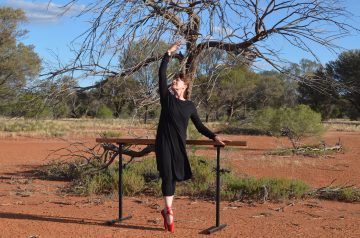
Image of a dancer wearing red pointe shoes in red dust. Photograph taken whilst filming in the outback of SW Queensland.

Source: SYork-Price

In her “Ageism and the mature professional dancer” research PAR network member Dr Sonia York-Pryce, a mature professional dancer herself, investigated the role of professional dancers who extend beyond the industry expectations of acceptable age and analysed the contribution that they are making to current dialogues relating to ageism within Western dance culture. Sonia collaborated with mature professional dancers to produce dance films celebrating their craft and gathered data through a survey and interviews with practitioners working in the field, nationally and internationally.

Sonia says: “Putting an ageing woman’s body on film is a challenging thing to do, considered a negative thing by some, but there is a lack of this in the media, dance, or film so there is a need to make this more mainstream and acceptable. It has prompted many interesting conversations. Much of my practice as research goes on in the ballet studio where I experience ageing physically on a daily basis which gives me great insight into how many of the mature dancers in my research have adapted their practice to accommodate their ageing bodies in order to keep performing.”

For more details about here work, check out her web site.
And here are links to Sonia’s dance films:
Interprète/Inappropriate Behaviour
Utterly (in)appropriate
āj

Dr Sonia York-Pryce studied classical ballet at Elmhurst Ballet School, UK and the Royal Ballet School UK, and contemporary dance at the London School of Contemporary Dance and the Laban Centre, in London, UK. She has enjoyed artist residencies with Red Gate Gallery, Beijing China, photographing Beijing LDTX Contemporary Dance Company; and an interdisciplinary residency with Hospitalfield House, Arbroath Scotland. She has also photographed London Studio Centre’s Images Ballet Company.


The Practice As Research network with its resources is free and always will be, but it does of course incur costs to run and to keep it running. If you use it and benefit, enjoy it and would like to keep it going, please, consider leaving something in the tip jar. Thank you!
In conversation 5: Dr Margaret E. Collins

The “In conversation” series aims to demonstrate the wealth, breadth and depth of what constitutes Practice As Research.

In this episode, Dr Nicole Brown talks to Dr Margaret Collins.

Margaret E. Collins is an award winning composer whose recent focus has been the integration of non-western instruments into ensembles with western orchestral instruments. Meg earned a PhD in Music composition form Trinity College Dublin, Ireland, for her dissertation “Melting the Boundaries: The integration of ethnic instruments into western art music.” She composed eight works featuring seven different ethnic instruments: the Chinese xiao, the Native American flute, the Persian tar, the Persian santoor, the Irish uilleann pipes, and Irish tin whistles. Her song for treble chorus, flute and piano, “maggie and milly and molly and may,” was awarded First Prize in the Berkshire Children’s Chorus Composition Competition.
For more information about her work and achievements, check out her web site.


Subscribe to the recordings:
Video hosted on the PAR YouTube channel.
Audio hosted on the PAR Buzzsprout channel and can be listened to on Spotify, Apple podcasts or on other RSS podcast apps.

The Practice As Research network with its resources is free and always will be, but it does of course incur costs to run and to keep it running. If you use it and benefit, enjoy it and would like to keep it going, please, consider leaving something in the tip jar. Thank you!
1.9. Participatory activist research: Reflexivity, transparency and accountability

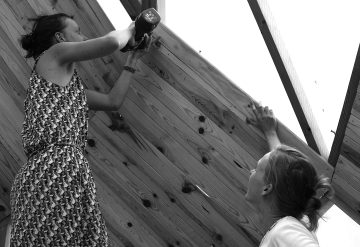
Seminar on the 1st June 2022

Source: Jenny Pickerill

Participatory activist research: Reflexivity, transparency and accountability
After briefly outlining what participatory activist research is, this talk will explore what it means to become intimately involved in activist projects as an academic researcher. Jenny will reflect on the need for transparency, accountability and a pragmatism in navigating the multiple demands of a neoliberal academy, activist temporalities, and personal emotions and politics in her work in community environmentalism.


Jenny Pickerill is a Professor of Environmental Geography and Head of Department of Geography at Sheffield University, England. Her research focuses on inspiring grassroots solutions to environmental problems and in hopeful and positive ways in which we can change social practices. She has published 3 books (Cyberprotest; Anti-war Activism; Eco-Homes) and over 30 articles on themes around eco-housing, eco-communities, social justice and environmentalism. She is currently completing her book Eco-communities: Living Together Differently.


Subscribe to the recordings:
Video hosted on the PAR YouTube channel.
Audio hosted on the PAR Buzzsprout channel and can be listened to on Spotify, Apple podcasts or on other RSS podcast apps.

The Practice As Research network with its resources is free and always will be, but it does of course incur costs to run and to keep it running. If you use it and benefit, enjoy it and would like to keep it going, please, consider leaving something in the tip jar. Thank you!


1.8. Drawing research: Using drawing as a participatory research paradigm

Source: Monica Sassatelli

Seminar on the 4th May 2022:

Drawing research: Using drawing as a participatory research paradigm
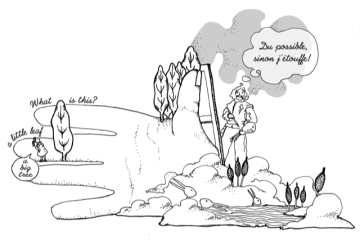
Drawing has had a place in social research for a long time, especially in anthropology as field note taking, but also more specifically and recently in arts-based research and visual studies. Social research on drawings is a well-established method in a variety of related areas from psycho-social research with children to market research. Research with drawings however, where both the artefact and the practice of drawing are a constitutive part of the production of knowledge being sought, often in collaboration with research participants, is rarer. In this talk Dr Monica Sassatelli looks into the latter, with particular focus on the affordances of narrative drawing.

There is some drawing involved in this presentation: please have some paper and a pencil or pen ready.
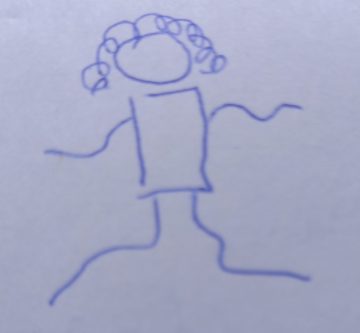
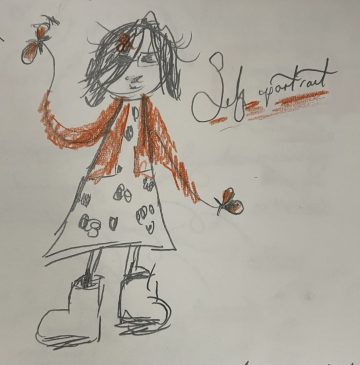
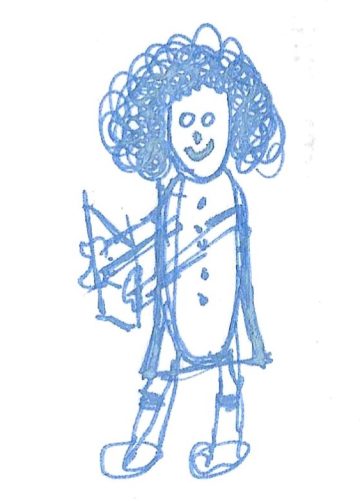
Here are some drawings from participants:

Self-portrait with noodle-arms.

Source: RJ

Self-portrait in two colours

Source: SBass

Self-portrait with lots of curly hair.

Source: NB


Download Dr Sassatelli’s slides.

Dr Monica Sassatelli is Associate Professor at the University of Bologna, Italy. She is a cultural sociologist with research expertise on on cultural events and institutions, cultural policies and creative industries. Among her publications are the monograph Becoming Europeans. Cultural Identity and Cultural Policies and the edited collection Arts Festivals and the Cultural Public Sphere. Recent articles include: “‘Europe in your Pocket’: narratives of identity in euro iconography” (Journal of Contemporary European Studies) and “Symbolic Production in the Art Biennial: Making Worlds” (Theory, Culture and Society).


Subscribe to the recordings:
Video hosted on the PAR YouTube channel.
Audio hosted on the PAR Buzzsprout channel and can be listened to on Spotify, Apple podcasts or on other RSS podcast apps.

The Practice As Research network with its resources is free and always will be, but it does of course incur costs to run and to keep it running. If you use it and benefit, enjoy it and would like to keep it going, please, consider leaving something in the tip jar. Thank you!
 

In conversation 4: Cymbeline Buhler

The “In conversation” series aims to demonstrate the wealth, breadth and depth of what constitutes Practice As Research.

In this episode, Dr Nicole Brown talks to Cymbeline Buhler.

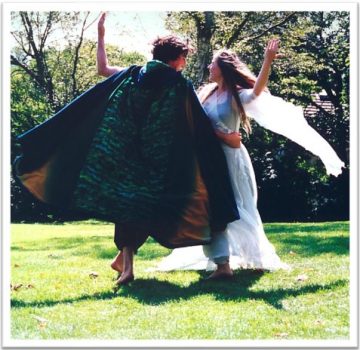
Two adult person wearing coats, twirling.

Source: CBuhler

Cymbeline Buhler has been a theatre artist for over twenty years. She has held Artistic Director positions at Western Edge Youth Arts in Melbourne and Backbone Youth Arts companies in Brisbane. She has developed over twenty original theatre productions that have shown in North America, Europe, Asia and Australia. Cymbeline is currently undertaking doctoral research investigating her arts practice within ‘Theatre of Friendship, Sri Lanka’, an ongoing peace-building arts network she founded in 2012. Her work has been located in spaces such youth engagement, disability arts, cross-cultural theatre and cross-generational communication.

Download more images from Cymbeline’s past projects here.

Subscribe to the recordings:
Video hosted on the PAR YouTube channel.
Audio hosted on the PAR Buzzsprout channel and can be listened to on Spotify, Apple podcasts or on other RSS podcast apps.

The Practice As Research network with its resources is free and always will be, but it does of course incur costs to run and to keep it running. If you use it and benefit, enjoy it and would like to keep it going, please, consider leaving something in the tip jar. Thank you!
In conversation 3: Prof Haidy Geismar

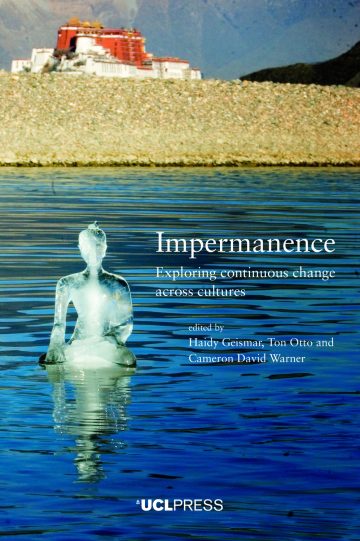
Cover of Prof Geismar's book "Impermanence"

Source: UCL Press

The “In conversation” series aims to demonstrate the wealth, breadth and depth of what constitutes Practice As Research.

In this episode, Dr Nicole Brown talks to Prof Haidy Geismar.

Prof Haidy Geismar is a social anthropologist with research interests in intellectual and cultural property, indigenous rights and colonial histories and legacies, new forms of cultural representation, the affects and effect of digitisation, the anthropology of art, critical museology and the South Pacific (especially Vanuatu and New Zealand).Current research projects include Finding Photography – a collaboration with collections care researchers to explore the social networks and materials underpinning contemporary digital art photography, and Collecting in Context – a project exploring the applicability of new digital collecting platforms in diverse cultural settings. Prof Geismar is committed to museum practice, with long-term affiliations to a number of different museums, including the Tate and Victoria and Albert Museum in London, and she has curated a number of exhibitions, including Port Vila Mi Lavem Yu (Port Vila, I love you) in Honolulu, Hawaii, in May 2011, and part of which then travelled to the United Nations Headquarters in New York. Prof Geismar’s work is available on the website https://www.haidygeismar.com/index.html and her two books Impermanence: Exploring continuous change across cultures and Museum object lessons for the digital age are free to download from the UCL Press website. 

Subscribe to the recordings:
Video hosted on the PAR YouTube channel.
Audio hosted on the PAR Buzzsprout channel and can be listened to on Spotify, Apple podcasts or on other RSS podcast apps.

The Practice As Research network with its resources is free and always will be, but it does of course incur costs to run and to keep it running. If you use it and benefit, enjoy it and would like to keep it going, please, consider leaving something in the tip jar. Thank you!
ResDance podcast: Embodied Inquiry

Image of logo of ResDance podcastThe ResDance podcast led by Dr Gemma Harman is dedicated to research methodologies and methods in dance practice. It is intended for educators, students, practitioners and performers and interdisciplinary researchers curious to learn more about dance research in action.

Episode 10 of the podcast relates to Embodied Inquiry. Dr Nicole Brown and Dr Jennifer Leigh offer insight into their shared understandings of embodiment and embodied practice. Through discussion of their research interests and the variety of methods and approaches employed in their own research, they explore what an embodied approach can bring to a research project. Reflections of considerations that need to be acknowledged in research, namely reflective practice, self-acceptance and positionality are also explored. The ideas presented are drawn from principles of embodied inquiry from their recent publication: Embodied Inquiry Research Methods.


Dr Nicole Brown is Associate Professor at UCL Institute of Education and Director of Social Research & Practice and Education Ltd. Nicole’s research interests relate to physical and material representations of experiences, the generation of knowledge and use of metaphors to express what is difficult to express, and more generally, research methods and approaches to explore identity and body work. Her books include Lived Experiences of Ableism in Academia: Strategies for Inclusion in Higher Education, Ableism in Academia: Theorising Experiences of Disabilities and Chronic Illnesses in Higher Education, Embodied Inquiry: Research Methods, and Making the Most of Your Research Journal.
She tweets as @ncjbrown and @AbleismAcademia.

Dr Jennifer Leigh initially trained as a chemist and somatic movement therapist before completing her doctorate in education at the University of Birmingham (2012). She is currently a Senior Lecturer in Higher Education and Academic Practice at the University of Kent (UK) where she co-chairs the Disabled Staff Network. She is Vice Chair (Research) of the International Women in Supramolecular Chemistry (WISC) network and has led on a paper setting out the ethos of calling in the community to enact change, and a forthcoming book. She has edited two books: Ableism in Academia with Nicole Brown, and Conversations on Embodiment. This year she co-authored Embodied Inquiry with Nicole Brown. Her research interests include marginalisation in academia, academic practice, academic development, and ableism as well as phenomenological and creative research methods in higher education and other applications.
Twitter: @drschniff @SupraChem @SupraLab1

The Practice As Research network with its resources is free and always will be, but it does of course incur costs to run and to keep it running. If you use it and benefit, enjoy it and would like to keep it going, please, consider leaving something in the tip jar. Thank you!
In conversation 2: Dr Sara Young

Image of the logo for the Practice As Research PAR networkThe “In conversation” series aims to demonstrate the wealth, breadth and depth of what constitutes Practice As Research.
In this episode, Dr Nicole Brown talks to Dr Sara Young.


Dr Sara Young is a lecturer at UCL Institute of Education. Sara’s research focuses on the relationship between language and identity, especially in the context of contemporary Britain, pre- and post-Brexit. Her current projects investigate bi/multilingual practices and identity construction amongst adolescents, and how these various practices may be at play in different spaces. Sara is also involved in Polish migration work, and has recently completed a Covid-19 related project which explored the impact of the lockdown on Polish Saturday schools in the UK, and the subsequent impact on heritage language learning. Sara specialises in narrative inquiry, exploring how narrative can be a means to construct identity, both for the individual and for nation states, and is also involved with the ethical nature of research, including the questions that arise when working with adolescents and young people; and the ethics of data translation and transcription in multilingual research.

Subscribe to the recordings:
Video hosted on the PAR YouTube channel.
Audio hosted on the PAR Buzzsprout channel and can be listened to on Spotify, Apple podcasts or on other RSS podcast apps.

The Practice As Research network with its resources is free and always will be, but it does of course incur costs to run and to keep it running. If you use it and benefit, enjoy it and would like to keep it going, please, consider leaving something in the tip jar. Thank you!

In conversation 1: Dr Jasmine Shadrack

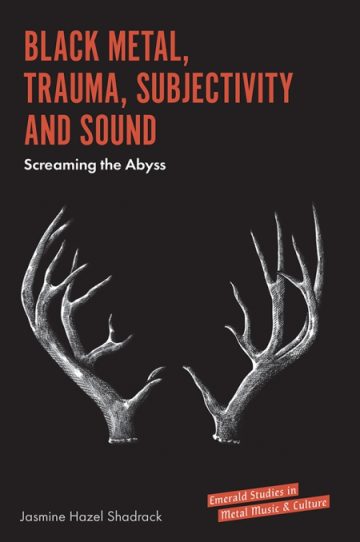
Image of book cover of Black Metal, Trauma, Subjectivity and Sound: Screaming the Abyss by Dr Jasmine Shadrack. Black book with picture of antlers and red lettering

Source: Emerald

The “In conversation” series aims to demonstrate the wealth, breadth and depth of what constitutes Practice As Research.

In this episode, Dr Nicole Brown talks to Dr Jasmine Shadrack.

Dr Jasmine Shadrack is a composer, musician, and scholar. She has been an extreme metal guitarist for the last twenty years and a black metal vocalist for the last five. Her research areas include trauma studies, disability studies, feminism, performance, extreme metal, autoethnography and psychoanalysis. She sits on the editorial board for the Metal Music Studies journal and is currently working on two co-edited collections, Music and Death vol. 2 (through Progressive Connexions and Emerald) and Metal and Dis/Ability with Professor Amber Clifford of the University of Missouri, USA, also through Emerald. She is currently composing a Requiem Mass and working on a dark folk collaboration with Francesca Stevens, entitled Dōlǒur. Her website is available at http://www.nacht-hexe.com. Jasmine’s book “Black Metal, Trauma, Subjectivity and Sound: Screaming the Abyss” is available from Emerald.

Subscribe to the recordings:
Video hosted on the PAR YouTube channel.
Audio hosted on the PAR Buzzsprout channel and can be listened to on Spotify, Apple podcasts or on other RSS podcast apps.

The Practice As Research network with its resources is free and always will be, but it does of course incur costs to run and to keep it running. If you use it and benefit, enjoy it and would like to keep it going, please, consider leaving something in the tip jar. Thank you!