Tag Archives: practice as research

4.4. Intersecting the tourist gaze with visual arts practice-based research

Source: LTodd

Seminar on the 25 March 2025

Intersecting the tourist gaze with visual arts practice-based research.

In this seminar, Dr Louise Todd will discuss her visual arts practice-based research to understand the visual culture of tourism and the tourist gaze thesis (Urry & Larsen, 2011). Here, it is suggested that tourists’ and others’ visual practices and performances, such as photography and sightseeing, form an intersection of gazes (Crang, 1997; Lutz & Collins, 1991).

Although tourism’s visual culture, and the tourist gaze, are of interest on interdisciplinary bases, much research in this area is written. The discussion is frequently captured and framed through considering photographic practices: particularly those undertaken by tourists, and within tourism settings (Ekici Cilkin & Cizel, 2021).

Louise Todd (2024) Memory Travels, oil on canvas, 100cm x 100cm, on view at Visual Arts Scotland (VAS) Then and Now: 100 years of Visual Arts Scotland, Royal Scottish Academy, Edinburgh, 17th February – 13 March 2024 (image to right of frame).

Nevertheless, there has been little attention directed to tourism through visual arts practice-based research. As an interdisciplinary approach which entwines creative arts with non-arts research contexts, visual arts practice-based research uses artistic process and practice as a way of understanding (Leavy 2020; McNiff, 2008).

Louise’s presentation will introduce her own visual arts practice-based research through drawing and painting. She will discuss using this method to reflect upon the intersection of my own others’ gazes, as she shifts identities of being an artist, a researcher, a tourist, and a viewer. She will then consider a recent series of paintings. In this work, past, present, and future, interplay with figures performing tourism and leisure in spaces. Concrete and intangible imaginaries, memories, artefacts, experiences, and hauntologies evoke the ‘not yet’, and ‘never was’ (Fisher, 2014) through visual associations and memories. She will conclude my presentation by reflecting on the potential of visual arts practice-based research in interdisciplinary settings such as tourism.


References
Crang, M. (1997). Picturing practices: research through the tourist gaze. Progress in Human Geography, 21(3), 359-373.
Ekici Cilkin, R., & Cizel, B. (2021). Tourist gazes through photographs. Journal of Vacation Marketing, 13567667211038955.
Fisher, M. (2014). Ghosts of my life: Writings on depression, hauntology and lost futures. John Hunt Publishing.
Leavy, P. (2020). Method meets art: Arts-based research practice. Guilford Publications.
Lutz, C., & Collins, J. (1991). The photograph as an intersection of gazes: The example of National Geographic. Visual Anthropology Review7(1), 134-149.
McNiff, S. (2008). Art-based research. In: J. G., Knowles, & A. L. Cole, (2008). Handbook of the arts in qualitative research: Perspectives, methodologies, examples, and issues. pp. 29-40. Sage.
Urry, J., & Larsen, J. (2011). The tourist gaze 3.0. Sage.

Dr Louise Todd is an Associate Professor and interim Head of the Tourism and Intercultural Business Communications Subject Group at Edinburgh Napier University. Louise leads the University’s Visual Methods and Ethnography Interdisciplinary Research Group and Public Engagement with research in the Business School. Louise’s background is in visual art and her practice and research are complementary. Her interests are in arts, cultural tourism and public engagement. She is concerned with visual culture, creative and visual research methods, alongside the potential of festivals and tourism to engage with community stakeholders.


Subscribe to the recordings:
Video hosted on the PAR YouTube channel.
Audio hosted on the PAR Buzzsprout channel and can be listened to on Spotify, Apple podcasts or on other RSS podcast apps.

The Practice As Research network with its resources is free and always will be, but it does of course incur costs to run and to keep it running. If you use it and benefit, enjoy it and would like to keep it going, please, consider leaving something in the tip jar. Thank you!



4.3. Sonic postcards as an arts-based approach to encourage collaboration

Source: LGriffin

Seminar on the 26 February 2025

Sonic postcards as an arts-based approach to encourage collaboration.

In this session, we would like to discuss a recent project that explores some of the ways in which arts-based thinking and practice might intervene productively to support transformative action and environmental planning at the local level. A project with George Revill from the Open University used arts-based practice to find ways of opening up spaces of engagement.

Source: GReville

Our work was part of an attempt to find ways to use creative and co-produced materials more systematically within policy engagement. We co-produced a short sonic documentary called Fishing for Life, which is currently being hosted at the Wells Maltings Arts Centre.

‘Fishing for Life’ is a sound work called a ‘sonic postcard’ co-created with stakeholders, fishers, researchers and a sound artist for a UKRI project called Sounding Coastal Change. Fishing for Life explores the social, economic, and environmental challenges facing fishing communities and the strategies that fishers use to cope with them.
Sonic postcards are co-produced pieces made by publics, researchers and sound artists working together in ways which creatively assemble and voice otherwise ‘unheard’ human and non-human voices. They work with sound, voice, music and different kinds of listening. They do not tell or instruct but are instead intended to raise awareness to enhance sensitivity and attentiveness to issues that might otherwise be unnoticed. A primary aim is to stimulate better-informed discussion around the issues concerned in order to generate productive dialogue and learning.
We would like to reflect upon the social and political roles that arts-based methods and creative practices might perform and, in particular, how they can encourage and enable engagement, collaboration, and learning around environmental challenges: processes that are all central to successful planning.

Liza Griffin is an Associate Professor of Urban Health and Environmental Politics at UCL’s Development Planning Unit, Bartlett. Liza’s research on urban health and spatial politics includes projects on community responses to urban flooding, relationships between greenspaces and wellbeing, and placemaking for people with dementia. Her work on ‘Creative Practice and the Anthropocene’ explores how publicly engaged arts-based thinking and practice can intervene productively in the current environmental crisis. 

George Revill is Professor of Cultural Historical Geography at The Open University. His work is concerned with landscape as a way of understanding past and contemporary experience and understanding of place, environment, and nature. Research projects involving creative practice include the AHRC funded “Earth in Vision,” focusing on digital broadcast archives and environmental history,  “Sounding Coastal Change” and “Sounding Out Wells” which used sound and music to explore environmental and social changes on the North Norfolk coast.

Subscribe to the recordings:
Video hosted on the PAR YouTube channel.
Audio hosted on the PAR Buzzsprout channel and can be listened to on Spotify, Apple podcasts or on other RSS podcast apps.

The Practice As Research network with its resources is free and always will be, but it does of course incur costs to run and to keep it running. If you use it and benefit, enjoy it and would like to keep it going, please, consider leaving something in the tip jar. Thank you!



4.2. Practice As Research in the studio

Source: AAsh

Seminar on the 23 January 2025

Practice As Research in the studio.

Andy will use this presentation to discuss aspects of his practice and inquiry. He will use the gallery space and the presentation to explore how he is progressing in the latest commission for the Winter Sculpture Park at the Thamesmead estate with Gallery No32.


Andy Ash is an artist, researcher and educator. His practice is primarily sculpture, but an expansive notion of a sculpture, and therefore includes film, performance, objects, sound, drawing, print, and text in an installation or site-specific contexts. Collaboration and dialogue play a big role in his creative process, making his work socially engaged and interdisciplinary. He has shown his art both in the UK and internationally, including exhibitions in Japan, Singapore, Finland, and Canada. Based in Brighton, Andy works out of his studio at the Red Herring artist cooperative in Portslade and serves as an Associate Professor at University College London (UCL).


Subscribe to the recordings:
Video hosted on the PAR YouTube channel.
Audio hosted on the PAR Buzzsprout channel and can be listened to on Spotify, Apple podcasts or on other RSS podcast apps.

The Practice As Research network with its resources is free and always will be, but it does of course incur costs to run and to keep it running. If you use it and benefit, enjoy it and would like to keep it going, please, consider leaving something in the tip jar. Thank you!


4.1. Discomfort and vulnerability as a research process

Source: LPrice

Seminar on the 7 November 2024

Discomfort and vulnerability as a research process.

In this seminar, Leri Price discusses discomfort and vulnerability within the context of her research with Syrian women living in Scotland.

Creative methods are often embraced as a means of addressing the power imbalance between participant and researcher. Committing to this does involve risk on the part of the researcher, however. How can researchers respect participants’ agency while also ensuring that they answer their own needs? And how far can, or should, discomfort be a part of this process?

During this seminar, Leri Price reflects on various encounters that occurred during fieldwork with Syrian women in Scotland on the subject of “home”, including instances where participants renegotiated the inclusion of objects in the research, and examples of avoiding engagement with the research topic. Although all parties continued to be warm, open, and engaged, the research process was subverted and/or redefined by the participants. These refusals led to what might be deemed “failed” fieldwork as Leri did not obtain the data she had anticipated gathering using creative and arts-based methods. Furthermore, Leri reflects on the implications of working in Arabic rather than her first language, English.

The presentation considers how these encounters affected the research. Vulnerability, while uncomfortable and exposing, was a key part of this reflective process and continues to be integral to her research practice. Leri takes the opportunity to reflect on what “radical openness” (Gilroy, 2004) and “staying with the trouble” (Haraway, 2016) look like in this context, how discomfort and how an openness to perceived challenges ultimately opened up new avenues of exploration and more ethically engaged research.

Leri Price is a doctoral researcher in the Intercultural Research Centre at Heriot-Watt University and her research works with Syrian women living in Scotland to explore meanings of home. She is particularly interested in exploring embodied and affective methodologies. Outside academia, Leri is a translator of Arabic literature. Her translation of “Where the Wind Calls Home” by Samar Yazbek is currently a Finalist for the 2024 National Book Award.


Subscribe to the recordings:
Video hosted on the PAR YouTube channel.
Audio hosted on the PAR Buzzsprout channel and can be listened to on Spotify, Apple podcasts or on other RSS podcast apps.

The Practice As Research network with its resources is free and always will be, but it does of course incur costs to run and to keep it running. If you use it and benefit, enjoy it and would like to keep it going, please, consider leaving something in the tip jar. Thank you!


Creative and participatory approaches to reduce alcohol harm in Nepal

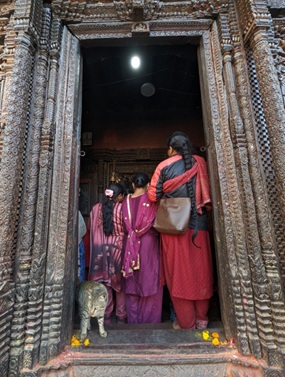
Image shows women in Nepalese clothing entering a religious space.

Source: Sushma Bhatta

In this blog post Dr Ranjita Dhital presents creative and participatory approaches to reduce alcohol harm in Nepal.

Though most people in Nepal do not consume alcohol, but those who drink do so in increasingly harmful ways. This has become a worrying trend in Nepal, leading to increased health and social problems for the drinker, their families, and communities. Alcohol has a long historic and cultural significance in Nepal. It is used in religious ceremonies, community festivals and other activities (see picture). In particular, the harmful custom of consuming locally made alcohol is concerning (usually made from grain and ranging from 10% to 40% of pure ethanol). There is also a growing harmful illicit market in the sale of this unregulated alcohol, and many poor communities rely on this as their main household income.

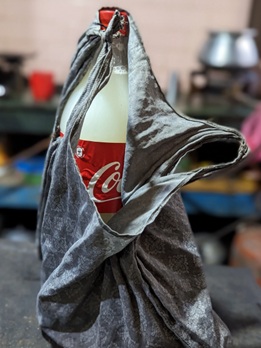
Image shows a bottle of coke filled with locally produced unregulated alcohol, which is often produced from fermented or distilled grain.

Source: Sushma Bhatta

Of the limited alcohol research and policy development in LMICs, very few have explored perspectives, contexts or experiences of individuals and communities. There is also no known intervention which has led to significant reduction in alcohol harm in Nepal. In LMICs’ health systems, resources including healthcare staff are limited. Therefore, alternative approaches are needed to increase availability and access to care by harnessing existing community assets more effectively. The use of cultural and community assets in public health can reduce stigma, raise awareness, and enable engagement of diverse communities. Such public health approaches would require participatory and co-design methodologies to examine cultural and community assets, including the arts, cultural heritage sites, natural environment, and community groups on their potential to reduce alcohol harm and associated risks.

First steps to exploring alcohol use in Chitwan District of Nepal:

We first scoped the breadth of existing cultural and community assets and how these were perceived by alcohol users and community health workers. The study was conducted in Chitwan, south-central Nepal, known to have considerable alcohol problems. Participatory asset mapping was conducted using field notes, photography, and through engaging with communities to explore how community assets affect alcohol consumption.

Semi-structured photovoice interviews were conducted with harmful drinkers (n= 12) (assessed through the validated Alcohol Use Disorder Identification Test (AUDIT) screening questionnaire) and community health workers (n= 6). During the interviews, participants used their photographs to reflect on how community assets influenced alcohol consumption and their relationship with alcohol.

Following thematic framework analysis three themes were produced: ‘influences and impact of families and communities’; ‘culture and spirituality’; and ‘nature and the environment’. The community mapping generated five factors which increased alcohol consumption: (1) availability; (2) advertising; (3) negative attitudes towards users; (4) festivals/gatherings; and (5) illiteracy/poverty. Six assets that discouraged consumption were: (1) legislation restricting use; (2) community organisations; (3) cultural/spiritual sites; (4) healthcare facilities; (5) family and communities; and (6) women’s community groups.

Those from certain ethnic groups consumed more alcohol, experienced family discord, or felt stigmatised due to their drinking. Assets such as ‘festivals/gatherings’ and ‘negative attitudes toward users’ and the theme ‘family and communities’ concerned with relationships and community activities were perceived to both promote and reduce alcohol use.

This was one of the first known studies in Nepal to explore alcohol use within the context of cultural and community assets. This research identified new possibilities to build on participatory and arts-based research methods.

This study was funded by Global Challenges Research Fund (GCRF; grant no. 48304AY). See open access link to study publication: https://journals.sagepub.com/doi/epub/10.1177/17579139231180744


Current Alcohol Co-design and Community Engagement (ACE) study

Following the study in Chitwan our interdisciplinary researchers and collaborators from Nepal and UK are co-producing the first known Critical Realist Review to examine a range of evidence (Dhital et al, forthcoming). The review will include published research from Nepal which have incorporated creative or participatory approaches in their methodology, policy documents and cultural resources considered to be assets by communities to reduce alcohol harm. To understand the value these cultural assets our research team conducted sensory ethnographic work around the study area Patan (an area known for its significant cultural heritage near Kathmandu). This involved exploring possible connections between culture, health and social consequences of alcohol use through regular observations (note taking, photography and filming) and through engaging with local communities.

We also plan to host an interactive community festival with local communities, artists and stakeholders to enrich our study findings. This includes identifying possible training and support needs with local communities, make recommendations to inform policy and plan future research. This study will support WHO Nepal’s work to reduce alcohol harm and strengthen its implementation roadmap in line with WHO’s Global alcohol action plan 2022–2030 and Sustainable Development Goals.

The ACE study is funded by the UK Arts and Humanities Research Council (AHRC, Grant Reference AH/X003973/1) and UCL Arts and Sciences Department Research Development fund awarded to Ranjita Dhital.

Dr Ranjita Dhital  is a Lecturer in Interdisciplinary Health Studies in the Arts and Sciences Department (UASc), Director of Research and Graduate Research Tutor. She is a Fellow of the Royal Society of Public Health (FRSPH), a registered pharmacist and a sculptor.

Her public health research is informed by creative and participatory methodologies. Her research applies arts and community-based approaches to reduce alcohol harm and promote mental wellbeing in high- and low-income countries. She is also using creative Participatory Action Research and Experience-based Co-design methods to optimise community pharmacy spaces (PRUK Leverhulme Fellowship) – The Architecture of Pharmacies.

She has practised as an addiction specialist pharmacist for the NHS, a community pharmacist and worked in public health. She founded and leads the ‘Creative Nepal: Arts-Health Community’ and the ‘International Arts in Pharmacy network’ . She is Chair of the ‘Royal Society for Public Health’s Arts Health and Wellbeing SIG’  and co-leads the ‘Neurodiversity In/& Creative Research Network’. She is the Director of Research and Graduate Research Tutor.

Ethics and Practice As Research with Children and Young People

In this blog post Julia Dobson and Hattie Lowe report on the Ethics and Practice As Research conference:

On Tuesday 11th June, a group of interdisciplinary researchers and practitioners gathered at the UCL Institute of Education to discuss and share insights on the ethics of researching with children and young people. As two doctoral candidates, Julia and Hattie, conducting research with young people, we reflect on the day’s sessions and emerging themes.

In the first presentation, Professor Jenny Parkes reflected on the ethics of researching violence with young people in the CoVAC (Contexts of Violence in Adolescence Cohort) study, which used the River of Life method with adolescents in Uganda to narrate their experiences through metaphor, drawing and discussion. The method supported adolescents to convey meanings on a difficult topic, co-constructing a narrative that reflected what they wanted to present to the world. The presentation illuminated stimulating discussions on the assumptions that appear inherent in the participatory methods discourse. Participatory methods aren’t always more ethical – they don’t automatically eradicate power imbalances and they are not devoid of the potential to re-traumatise participants. Doing participatory research in meaningful and ethical ways with children requires flexibility, creativeness and time investment, and Jenny ended with a thought-provoking quote from Spyros Spyrou (2011) who states “the quick and easy way is not necessarily the most ethical way; the ethical way necessities time for reflection”.

Dr Amanda McCrory began her presentation by posing a similar provocation: “it is dangerous to assume that just because a piece of research has been passed by an ethics committee then it is ipso facto an ethical piece of research”. She then introduced a series of thought-provoking ethical considerations when involving children as active researchers. She called on us to start with ourselves: asking, for example, how can we be a ‘critical friend’ to young researchers, rather than a ‘controlling expert’? She then invited us to consider different ways in which children become more involved in both the ethics process and the research. It was inspiring to learn from Amanda’s approach to ethically – and dynamically – engaging young people in research, including: accessible explanations of the research process, checking in regularly with students, offering sufficient training, and thinking carefully about what will be meaningful and beneficial for the young people involved.

Dr Jessica Hayton’s presentation centred on the language we use in research ethics processes and how this impacts the meaningful engagement of children. Terms that researchers take for granted, such as ethics, consent and honesty, can mean entirely different things to children, demonstrated through audio clips from Jess’ 5-, 7- and 11-year-old nieces, one of whom initially confused ‘ethics’ with ‘Essex’ (a town in England) though also understood the term as “something to do with science”. Without a shared language through which to discuss ethics, we stumble at the first hurdle. There was interest from the audience in how we invest more into slow and iterative ethical engagement with children in the face of time, funding and institutional constraints. Jess concluded with the argument that doing ethics well with children doesn’t have to be complicated, we can ask children and families what they need, and we can be creative in how we present information, but we must build these processes in from the very beginning.

In their joint presentation, Dr Ruolin Hu and Dr Sara Young shared findings from their pilot study exploring postgraduate students’ views towards research ethics and the ethics approval procedure. They began by inviting us to reflect upon how we can present ethics as a way of learning, rather than a tick box exercise. Although there is growing awareness that ethics goes beyond the approval procedure, fear of the form can still be dominant in students’ perceptions of research ethics. Sara and Ruolin’s research suggests that students may start their course with little understanding of research ethics. Embedding ethics throughout research training programmes, rather than having separate sessions, could support students to develop their conceptualisation of and confidence in ethical research. Taking part in this pilot research also helped students to develop their understanding of research ethics, so it is great that more students will be able to benefit in the wider scale study.

The final session of the day was a Q&A with Dr Nicole Brown, Nishita Nair and Dr Nicolas Gold, who between them have a wealth of experience sitting on research ethics committees and conducting participatory and creative research with children and young people. Discussions explored how we classify vulnerability, the need to be accountable with dissemination, AI in research, the importance of relationship building with parents and caregivers when doing research with children, safeguarding training for student researchers and avoiding editorial bias. Our thoughtful and thought-provoking panellists closed the Q&A by emphasising the university’s responsibility to protect researchers and participants, and get people interested in ethics through capacity building alongside procedures.

Personal reflections

Hattie: The discussion during the Q&A about how we can generate more interest in research ethics, rather than seeing it as a procedural hoop we have to jump through, resonated with my own doctoral research which explores adolescents’ perspectives on violence against women through participatory peer-research. If we re-centred our perspective on ethics procedures and saw them as an opportunity, could the ethics process add to our projects in transformative ways? Through the questions that research ethics encourages us to interrogate, we could work towards optimising children’s engagement, enjoyment and empowerment, rather than focusing on how we need to protect them through limiting their participation in ‘sensitive’ research as ‘vulnerable’ participants.

Julia: Discussions in both Jenny’s talk and the Q&A about ethical research endings were particularly timely for me, as my doctoral fieldwork draws to a close. As Jenny reminded us, thinking carefully through how we end research is so important. I was struck by the complexity of endings, and what they might bring up for both researchers and participants. For me, this process has brought up emotional and practical considerations, including how to: deliver feedback to schools; give thanks to students and staff; draw our activities to a satisfactory end; and meaningfully honour our research relationships. The conference discussions offered support, ethical grounding and solidarity, as I grapple with these ethical questions.

To conclude, it was brilliant to have the time and space to engage in ethical dialogue with colleagues from diverse positions across UCL. Such interdisciplinary dialogues hold the potential to be transformatory for ethical research procedure and practice – we look forward to continuing the conversation!

Thank you to Dr Sara Young for leading the organisation of this fantastic event, and thank you to Dr Ross Purves and Dr Giuliana Ferri for their excellent facilitation.

Funding was awarded from the IOE Faculty Research Budget, and by the IOE Department of Curriculum, Pedagogy and Assessment (CPA).

3.7. Pedagogy, practice, play, and participation: Mutual learning in a co-created youth wellbeing project

Source: JPFortier

Seminar on the 8 July 2024

Pedagogy, practice, play, and participation: Mutual learning in a co-created youth wellbeing project.

In this seminar, Dr Julia Puebla Fortier discusses co-production between an academically trained researcher, artists, and young people.

One of the exciting possibilities for practice as research is gathering and acting on insight at all stages of a project’s evolution. Using principles of co-production and reflective learning, researchers, delivery partners and participants can actively shape, refine and assess intentions and outcomes.

Source: JPFortier

The Reach In Reach Out (RIRO) programme was co-created with young people to support their creativity and wellbeing and offer pathways to community engagement and volunteering in the cultural sector. The project targeted young people in the west of England living with physical or psychosocial challenges, at risk of social isolation, or transitioning to further education or employment. Through RIRO, the young people made extraordinary personal gains in creative skills, wellbeing and cultural management, and the project partner institutions strengthened their ability to engage with and co-create with youth.

Source: JPFortier

From the outset, we collaboratively designed a process to build understanding of our practice as it evolved. This presentation will explore how an academically trained researcher, artists, and young people can co-produce a reflective learning and evaluation process to improve practice in real time, collecting a variety of rich data to assess impact, produce guidance for replication, and build the creative research skills of young people and artists.


Dr Julia Puebla Fortier was the project co-lead of the RIRO project for Arts & Health South West. Her policy and academic experience, honed through work with multiple stakeholders and doctoral study at the London School of Hygiene and Tropical Medicine, has been transformed by using participatory, creative, and relational approaches in research, evaluation, and programme management. She has a particular interest in cross-sectoral collaboration for arts and health, the emotion work of creative health practitioners, training community researchers, and improving health and wellbeing of culturally diverse communities. She is currently an Honorary Research Fellow at the University of Bristol Medical School and does independent consulting.


Subscribe to the recordings:
Video hosted on the PAR YouTube channel.
Audio hosted on the PAR Buzzsprout channel and can be listened to on Spotify, Apple podcasts or on other RSS podcast apps.

The Practice As Research network with its resources is free and always will be, but it does of course incur costs to run and to keep it running. If you use it and benefit, enjoy it and would like to keep it going, please, consider leaving something in the tip jar. Thank you!


3.6. Exploring local cultural forms, engaging stakeholders, and informing policy and curriculum through arts-based research methods

Source: ABreed

Seminar on the 14 May 2024

Exploring local cultural forms, engaging stakeholders, and informing policy and curriculum through arts-based research methods.

In this seminar, Professor Ananda Breed discusses using arts-based research methods at scale.

In this talk, Professor Ananda Breed will provide case study examples regarding the use of arts-based methods for a four-year Arts and Humanities Research Council (AHRC) Global Challenges Research Fund (GCRF) project entitled Mobile Arts for Peace: Informing the National Curriculum and Youth Policy for Peacebuilding in Kyrgyzstan, Rwanda, Indonesia, and Nepal. In Rwanda, drumming was used to challenge gender inequality. In Kyrgyzstan, performance was used to create a platform for dialogue between young people and decision makers. In Nepal, Mithala Arts and Deuda were used to integrate marginalised cultural forms and communities into local and national curriculum. In Indonesia, bamboo Angklung  and Lenong folk theatre were used to represent youth issues and to create a platform for youth representation at the national level. Breed will provide an overview of the varied opportunities and challenges of using arts-based research methods across the project that engaged over 194 partner organisations, 828 engagement activities, and 279 artistic outputs, serving over 28,000 beneficiaries between 2020-24.

Download Ananda’s presentation in PDF.
Download Ananda’s slides in PPTX.
More information on Ananda’s MAP project.
More information about the MAP conference.

Ananda Breed is Professor of Theatre and Principal Investigator of AHRC GCRF Network Plus project Mobile Arts for Peace (MAP): Informing the National Curriculum and Youth Policy for Peacebuilding in Kyrgyzstan, Rwanda, Indonesia and Nepal (2020-24) and GCRF Newton Fund project Mobile Arts for Peace (MAP) at Home: online psychosocial support through the arts in Rwanda (2020-22). Breed is author of Performing the Nation: Genocide, Justice and Reconciliation (Seagull Books, 2014), co-editor of Performance and Civic Engagement (Palgrave Macmillan, 2017), co-editor of Creating Culture in (Post) Socialist Central Asia (Palgrave Macmillan, 2020), and co-editor of The Routledge Companion to Applied Performance (Routledge, 2022). Former research fellow of the International Research Centre Interweaving Performance Cultures at Freie Universität (2013-214).

Further information shared in the session:
Access Charlie Ingram’s introductory document exploring practice. Using Theatre practice as a way to engage in evaluation processes and more specifically policy feedback processes, and here is the link to a research article that explores the same.

Access Ranjita Dhital’s article on her research in Nepal.

Julia Puebla Fortier and team used arts-based and participatory evaluation approaches in their UK programme to support the well-being of young people through cultural engagement and volunteering. Access their toolkit on lessons learned and tips for practice.

Here is an example of a project using theatre methods to engage young people around the issues of climate change, through giving them agency to create what they want. Its a flexible, responsive and non-linear learning, drawing inspiration from young people’s local contexts.


Subscribe to the recordings:
Video hosted on the PAR YouTube channel.
Audio hosted on the PAR Buzzsprout channel and can be listened to on Spotify, Apple podcasts or on other RSS podcast apps.

The Practice As Research network with its resources is free and always will be, but it does of course incur costs to run and to keep it running. If you use it and benefit, enjoy it and would like to keep it going, please, consider leaving something in the tip jar. Thank you!


3.5. Practice as research in counselling: The development of a model of counselling for sight loss.

Source: MThurston

Seminar on the 13 March 2024

Practice As Research in counselling: The development of a model of counselling for sight loss.

In this seminar, Dr Mhairi Thurston discusses Practice As Research in counselling.

“You feel as though someone’s chipped a bit out of your heart and your soul”. Practice as research in counselling: The development of a model of counselling for sight loss.
This talk outlines the mental health impacts of sight loss, through lived experience and through research. It charts the development of a model of counselling for people with sight loss, using practice as research in counselling. A quasi-judicial, hermeneutic, single-case efficacy design methodology will be explained.

Dr. Mhairi Thurston is an accredited and registered Pluralistic counsellor, as well as a Senior Lecturer in Counselling at Abertay University in Dundee. She served on the British Association for Counselling and Psychotherapy (BACP) Board of Governors from 2011 to 2020 and chaired the BACP Research Committee from 2018 to 2020. She currently chairs the BACP Good Practice Committee. Her primary research interest focuses on the social and emotional impact of acquired sight loss. Additionally, she is interested in broader issues surrounding disability, equality, and inclusion. She developed a pluralistic practice model for counselling individuals with vision impairment.  She won the British Association of Counselling and Psychotherapy New Researcher Prize in 2009. Describing herself as an ‘academic activist,’ she employs research and collaboration to effect real-world change for people with vision impairment. She has worked collaboratively with RNIB to produce an award-winning training course for counsellors working with individuals who have vision impairment. She has also collaborated with Retina UK to create a free online resource that supports mental well-being in the visually impaired community. Furthermore, she founded the Sight Loss Research Network (SLRN) in collaboration with Dr. Hazel McFarlane of Alliance Scotland, aiming to bring academics and charities together to foster opportunities for collaboration. She has previously been an associate editor for the International Journal of Disability, Development, and Education, and she is a member of the editorial board of Disability and Society. She also serves as a Lay Advisor for the Royal College of Ophthalmologists. Mhairi is severely sight-impaired and has a guide dog called Meadow.


Subscribe to the recordings:
Video hosted on the PAR YouTube channel.
Audio hosted on the PAR Buzzsprout channel and can be listened to on Spotify, Apple podcasts or on other RSS podcast apps.

The Practice As Research network with its resources is free and always will be, but it does of course incur costs to run and to keep it running. If you use it and benefit, enjoy it and would like to keep it going, please, consider leaving something in the tip jar. Thank you!


3.4. Entanglements: Practice As Research and “thinking-with” in prison education research

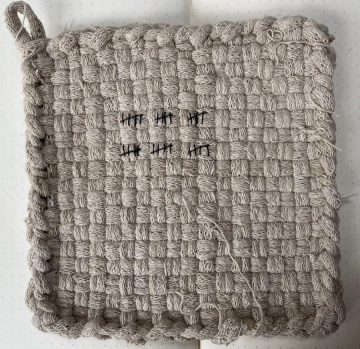
A weaved off-white fabric with black stitches

Source: LHarding

Seminar on the 9 January 2024

Entanglements: Practice As Research and “thinking-with” in prison education research.

In this seminar, Lucy Harding discusses her material, creative, activist research of prison education spaces.

Lucy Harding has used several creative methods throughout her research of prison education spaces. This includes informally thinking-with drawing, weave, and stitch and more formally researching with walking interviews, a ‘visual matrix’ method (Froggett, Manley & Roy, 2015) together with diffractive analysis. Each time she has chosen these methods, it has also been a conscious choice to be-with the data and ideas materially, where she takes inspiration from Erin Manning and calls on her intuition as a craft of research (Bell & Wilmott, 2020). But it has also been due to an innate ‘feeling’ to explore new ways, to delve deeper into affective responses, in an activist stance against the ‘academicwritingmachine’ (Henderson, Honan and Loch, 2016).

There is joy in being creative but there is angst and fear in the sharing this activism with others, especially when working with political bodies such as the prison service. This is when the discomfort hits. She then goes through a process of questioning the methodology, the material choices, the philosophy behind and in between the outcomes. In this seminar she will share how it felt to push past these feelings of discomfort and ‘stay with the trouble’ (Haraway, 2016).


Lucy Harding holds the position of Senior Educationalist at the Royal College of Physicians whilst also pursuing her doctoral studies at the University of Central Lancashire. With a career in education for over two decades, she initially specialised in creative disciplines such as textiles and fashion. Her professional journey led her to be a programme leader of teacher education followed by an educational management role in a male prison.

Working within the confines of prison environments has profoundly influenced her perspective of challenging teaching in the periphery of the education sector. Her research focus centres on understanding the affective experiences of teachers working in demanding and often traumatic settings. In her research methodology, she employs innovative approaches, incorporating creative elements such as drawing, weaving and stitchwork as integral components of data collection and postqualitative inquiry. This unique approach allows her to perceive phenomena in new and different ways.


Subscribe to the recordings:
Video hosted on the PAR YouTube channel.
Audio hosted on the PAR Buzzsprout channel and can be listened to on Spotify, Apple podcasts or on other RSS podcast apps.

The Practice As Research network with its resources is free and always will be, but it does of course incur costs to run and to keep it running. If you use it and benefit, enjoy it and would like to keep it going, please, consider leaving something in the tip jar. Thank you!